
Water chemistry
Common Problems and Quick Fixes
Cloudy water, algae, strange noises — what to check first before you call.
When something looks off in the pool, a calm first check saves money and stress. Here is what we tell Tidewater Care homeowners to try before they assume the worst.
Cloudy water
Check first: Free chlorine, pH, and filter pressure.
Low sanitizer or high pH are the usual suspects. A dirty filter that will not put out clear the water is next. Test, adjust chemistry in small steps, clean or backwash the filter, and give circulation time to work. If the water is still milky after you have corrected the numbers and cleaned the filter, call us.
Green or yellow-green water
Check first: Free chlorine and whether you have brushed the walls.
True algae needs sanitizer, brushing, and filtration. Virginia spring “green” is sometimes heavy pollen sitting on the surface and in the filter — not a full bloom. Scoop, brush, filter, and test before you empty half the chemical supplies into the pool.
Eye irritation or strong chlorine smell
Check first: Combined chlorine and pH.
A strong chlorine smell often means used-up chlorine (chloramines), not too much free chlorine. Shocking per your system’s guidance and fixing pH usually helps. If irritation continues with balanced numbers, look at cyanuric acid and bather load.
Low water level
Check first: Whether it is evaporation or a leak.
In hot, dry stretches, evaporation is real — especially with a water feature and no cover. Mark the waterline and watch it. A steady drop may mean a leak. Do not ignore repeated unexplained water loss.
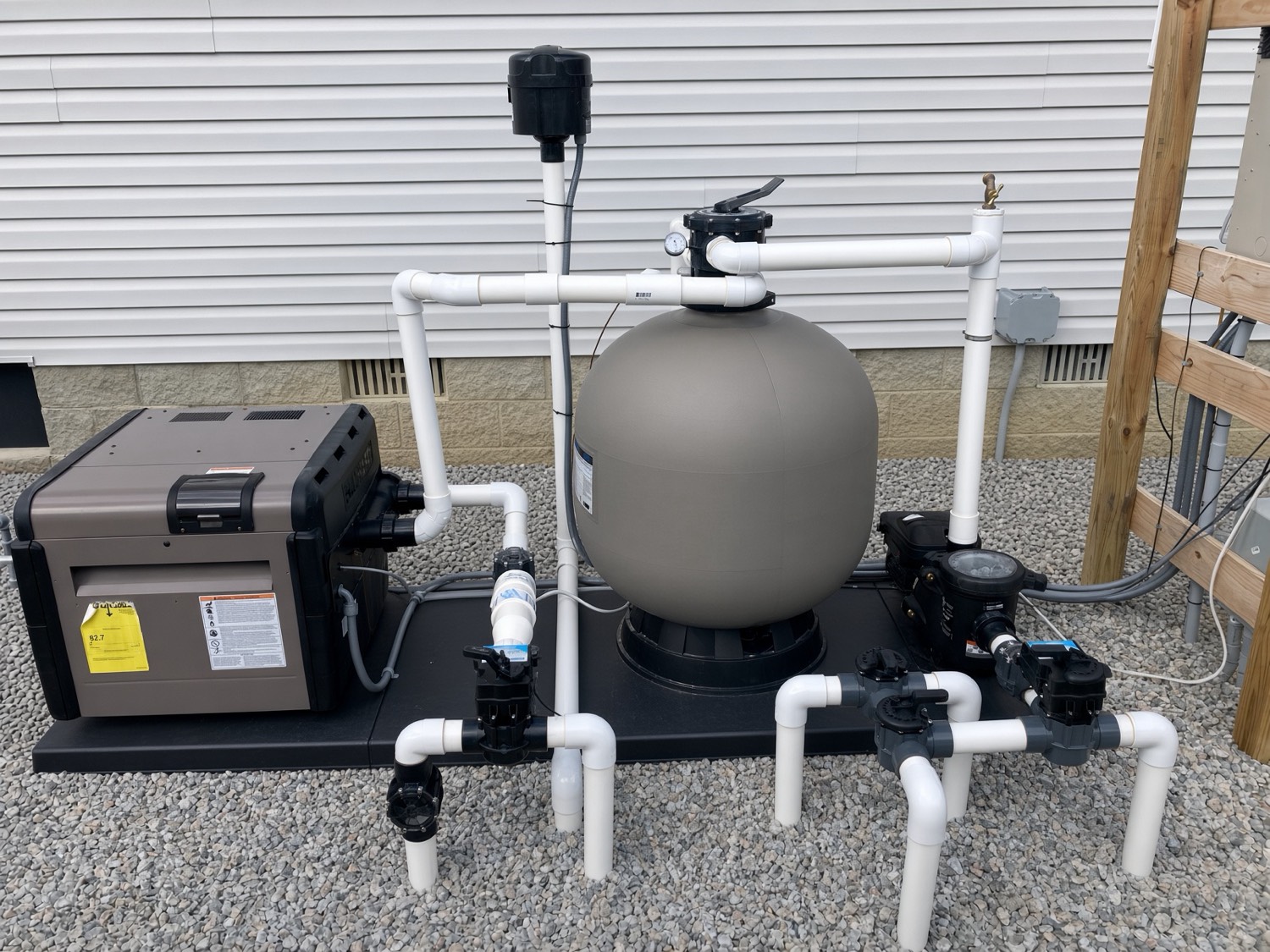
Equipment noise or short cycling
Check first: Baskets, valves, and obvious leaks.
A full pump basket or a closed valve can make a pump sound like it is dying. Clear the baskets, confirm valves are in the normal operating position, and look for water under the equipment pad. Persistent grinding, squealing, or error codes are asking for a service call — do not keep resetting and hoping.
Auto-cover issues
Check first: Track debris and water level.
Covers need a clear track and a water level in the range the manufacturer specifies. Leaves and toys in the track cause most “it will not close” calls. Do not force a motor that is straining.
When to stop and call
- Electrical burning smells or tripped breakers on pool circuits
- Structural cracks that are growing
- Gas heater issues you are not trained to touch
- Chemistry that will not stabilize after two careful adjustments
You know the pool. We know the equipment and the patterns. If a quick fix does not stick, inquire about service and bring the test numbers if you have them.