
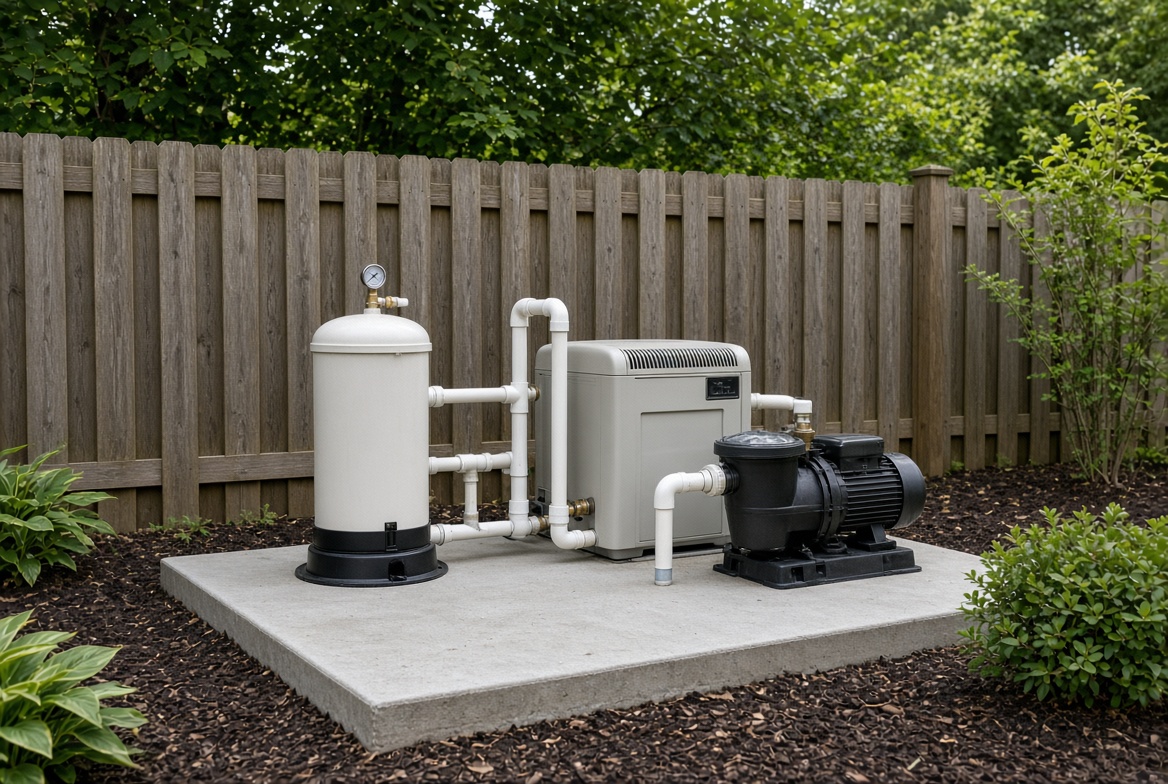
Equipment
Equipment Pad Inspection — What We Look at Every Stop
The pad is part of the visit. Pump, filter, heater, salt cell, valves, leaks, and noise — photographed before we leave.
Most “the pool just stopped” calls start on the pad, not in the water. That is why Tidewater Care inspects equipment on every visit — not as a stop we skip.
What the inspection covers
- Pump: prime, noise, unions, obvious leaks
- Filter: pressure against the baseline we recorded
- Heater or heat pump: error lights, airflow, condensate, obvious faults
- Salt cell: scale, output, cable condition
- Valves and automation: positions, battery backups, panels that have gone dark
- The slab itself: standing water, corrosion, blocked access
Why a photo matters
A picture of a wet union in June is how you do not argue about a failed pump in August. Notes without photos are easy to forget. Photos without notes are a gallery. We do both.
Coastal air vs inland clay
Salt air and humidity work on metal the way inland heat does not. Clay and drainage show up as wet yards and stressed pumps. The checklist is the same. The failures are not. We do not copy a Beach pad look onto a Chesterfield lot.
What we will not pretend
We will not invent a 24/7 promise. We will not keep resetting a heater that needs diagnosis. We will say when a repair is beyond a route stop.
If your current service never looks at the pad, that is not a complete visit. Inquire about Tidewater Care.